
Sheet Metal Fabrication
Sheet metal fabrication is a a machining manufacturing technique that involves the use of metal sheets to form parts, into custom-designed components. The process integrates multiple core operations including cutting, bending, punching, shearing, welding, riveting, and surface treatment to achieve the desired structure. A key characteristic of sheet metal fabrication is that the thickness of the same finished part remains consistent, making it ideal for producing uniform, lightweight, and structurally stable components.
Core Advantages of Bomei’s Metal Fabrication Service
Bomei specializes in providing customized sheet metal fabrication solutions for global clients across multiple industries, with core advantages covering both prototyping and mass production needs:
- Flexible Production Coverage: Supports both low-volume prototyping and high-volume mass production, seamlessly meeting project needs from design verification to market launch.
- Rapid Prototyping Capability: Translates design concepts into physical parts quickly without the need for expensive tooling or molding, significantly shortening the product development cycle.
- Complex Structure Machinability: Excels at processing complex structures through integrated multi-process operations, especially for thin-walled parts that require consistent thickness and structural stability.
- Professional Process Expertise: Our team has rich experience in comprehensive sheet metal processes, ensuring precise execution of each operation and consistent quality of finished parts.
- Efficient Turnaround Service: Optimizes production workflows to deliver high-quality sheet metal components quickly, supporting clients in meeting tight project timelines.
Common Materials for Precision Metal Fabrication
Bomei selects high-quality sheet metal materials based on client project requirements (e.g., corrosion resistance, mechanical strength, cost-effectiveness), with the following commonly used materials:
1. Galvanized Steel Sheet SECC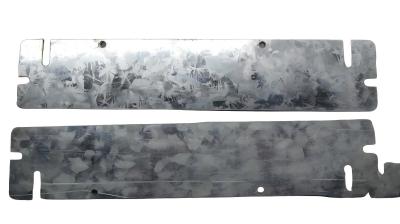
The substrate is ordinary cold-rolled steel coil, which undergoes degreasing, pickling, electroplating, and multi-step post-treatment in a continuous electro-galvanizing production line. It features excellent corrosion resistance and cost-effectiveness, suitable for a wide range of general industrial applications.
2. Ordinary Cold-Rolled Sheet SPCC
Produced by continuously rolling steel ingots into steel coils or sheets of the required thickness through a cold rolling mill. It has good formability and machinability, making it a cost-effective choice for general structural parts.
3. Hot-Dip Galvanized Steel Sheet SGCC
Processed from hot-rolled pickled or cold-rolled semi-finished products through cleaning, annealing, and immersion in a molten zinc bath (around 460°C) to form a zinc coating, followed by quenching, tempering, flattening, and chemical treatment. It offers superior corrosion resistance compared to electro-galvanized sheets, ideal for outdoor or harsh environment applications.
4. Stainless Steel SUS304
One of the most widely used stainless steel grades, containing nickel (Ni) which enhances corrosion resistance and heat resistance compared to chromium (Cr)-only steels. It has excellent mechanical properties, no heat treatment hardening phenomenon, and no elasticity, suitable for food-grade, medical, and high-corrosion-resistance requirements.
5. Stainless Steel SUS301
Has a lower chromium (Cr) content than SUS304, resulting in slightly lower corrosion resistance. However, it achieves good tensile strength and hardness through cold working, with excellent elasticity. It is mainly used for shrapnel springs, anti-EMI (electromagnetic interference) components, and other parts requiring elastic performance.
SEO Keywords: SECC galvanized steel sheet, SPCC cold-rolled sheet, SGCC hot-dip galvanized sheet, SUS304 stainless steel sheet metal
Bomei’s Precision Custom Metal Fabrication Processes
We adopt a systematic process management approach, integrating multiple professional operations to ensure the precision and quality of sheet metal parts. The core processes include:
1. Blanking Process
Accurately cutting raw sheet metal into the required size and shape using advanced equipment: digital punching, laser cutting, and shearing machines. Laser cutting ensures high-precision cutting of complex contours, while digital punching supports efficient processing of regular holes and slots.
2. Forming Process
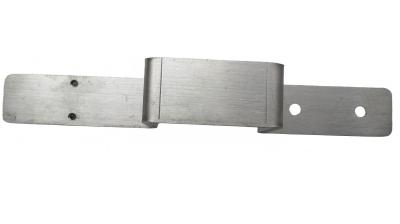
Shaping the blanked sheet metal through bending, stretching, and punching operations. We use professional bending machines and punches to achieve precise angle bending (any required angle) and complex three-dimensional shaping, ensuring the formed parts match the design dimensions.
3. Secondary Processing
Including pressure riveting (for firm assembly of fasteners) and tapping (for internal thread processing), enhancing the assembly performance and functional integrity of sheet metal parts.
4. Welding Process
Connecting multiple sheet metal components into a complete structure using professional welding techniques. Our skilled welders ensure strong, seamless welds with good appearance, meeting structural strength requirements.
5. Surface Treatment
Improving the appearance, corrosion resistance, and wear resistance of sheet metal parts through processes such as powder spraying, electroplating, wire drawing, and silk screen printing. Surface treatment can also be customized according to client brand colors and application environments.
Industry Applications of Metal Fabrication
Bomei’s custom sheet metal fabrication parts are widely used in various industries, leveraging the advantages of lightweight, high precision, and cost-effectiveness:
- Industrial Machinery: Enclosures, brackets, protective covers, and conveyor system components.
- Automotive Industry: Car body parts, chassis components, exhaust system parts, and interior decorative sheets.
- Electronic & Electrical: Enclosures for servers, power supplies, electrical control cabinets, and connector brackets.
- Aerospace: Lightweight structural parts, ventilation components, and instrument enclosures.
- Medical Devices: Enclosures for medical equipment, surgical instrument brackets, and sterile sheet metal components.
- Daily & Industrial Equipment: Fuel tanks, oil cans, ventilation pipes, and chimney components.


 Evan Xiao