
CNC Turning
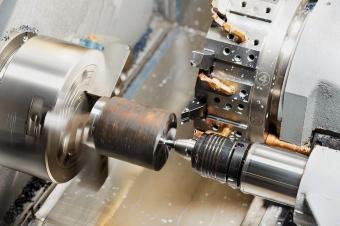
CNC turning is a precision machining process that involves clamping bar or pipe materials onto a chuck, which rotates the workpiece at high speed. A cutting tool is precisely fed into the rotating workpiece to remove excess material, shaping it into the desired design. This process is widely recognized as the most efficient and cost-effective solution for manufacturing cylindrical parts (such as pins, shafts, and spacers) and components with rotational features, ensuring consistent dimensional accuracy and surface finish.
Bomei’s CNC Turning Service Advantages
Since 2012, Bomei has been specializing in providing high-quality CNC turning services, covering prototype development, small-batch sampling, and large-scale mass production. Our core advantages lie in competitive pricing for small-quantity
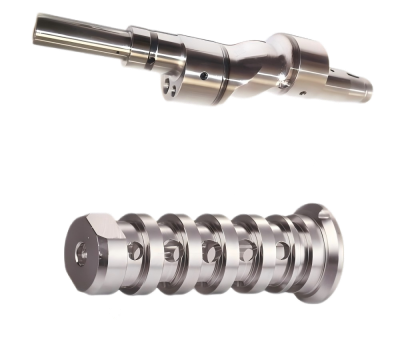 orders and reliable, on-time delivery, enabling us to meet the diverse needs of global clients across various industries. To underpin our service quality, we are equipped with high-end CNC turning centers featuring driven tools, enabling integrated turning and milling processing in a single setup. This integrated mode eliminates repeated clamping errors, ensuring the highest processing accuracy of workpieces. Additionally, we own machining centers with dual opposed main spindles. Workpieces are automatically transferred between the two spindles, realizing high-precision double-sided machining and significantly improving processing efficiency and consistency.
For shaft parts and complex rod-shaped rotating components, our turning centers are equipped with dual simultaneous turrets and automatic loading/unloading systems. These modern production technologies not only achieve automated, continuous processing but also guarantee extreme precision and stable quality of batch products.
Range of Machinable Materials
1. Metals
2. Plastics
Core CNC Turning Operations
We master a full range of standard and special CNC turning operations to meet complex part design requirements. Common and specialized operations include:
- Taper Turning: Processes cylindrical sections with a diameter that gradually decreases from one end to the other, suitable for tapered workpieces such as conical shafts.
- Hard Turning: Specializes in processing materials with a Rockwell C hardness greater than 45, typically for workpieces after heat treatment, eliminating the need for additional grinding processes.
- Spherical Generation: Creates high-precision spherical surfaces that rotate around a fixed axis, widely used in precision bearing components.
- Facing: Machines the end face of the workpiece to the center, ensuring flatness and perpendicularity to the axis.
- Parting Off: Cuts deep grooves to separate finished or semi-finished components from the original bar material, ensuring clean cutting surfaces.
- Grooving: Similar to parting off, but only cuts to a specified depth from the outer or inner surface of the workpiece, used for machining grooves and slots.
- Other Standard Operations: Boring, reaming, drilling, knurling, threading, etc., covering comprehensive processing needs of cylindrical parts.


 Evan Xiao