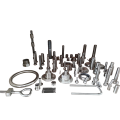
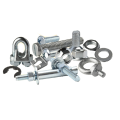
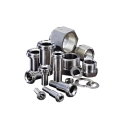
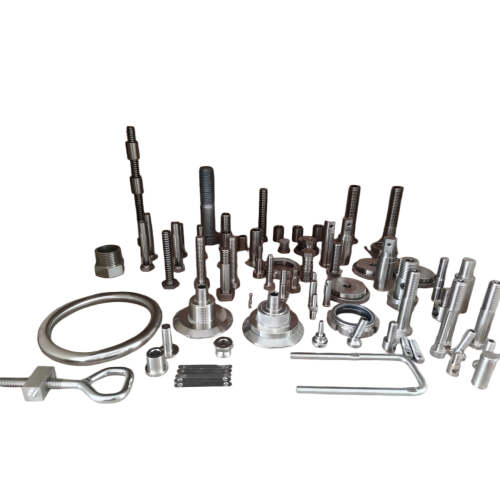
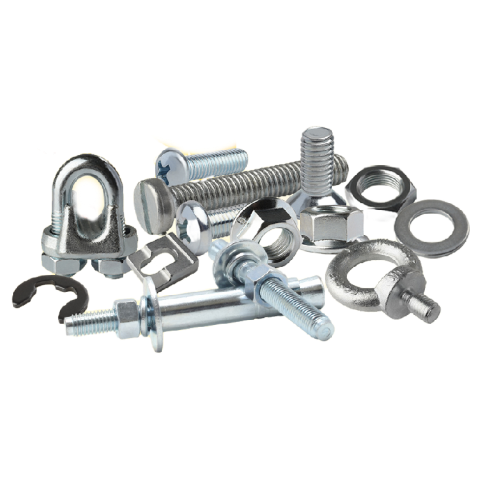
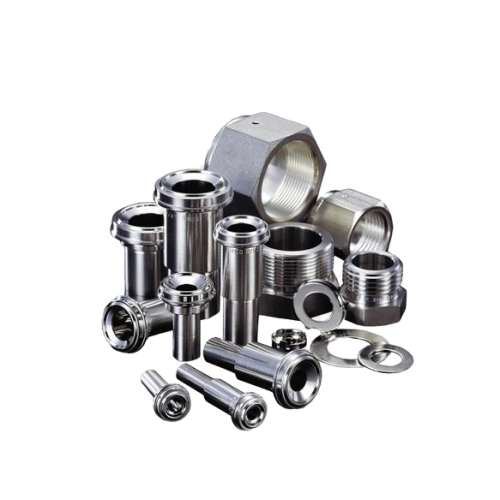
Industrial fasteners are mechanical hardware components used to join, secure, position, or retain parts in an assembly. Industrial fasteners aren't just simple connectors. They're precision parts made to handle big forces – whether that's pulling (tension), pushing (compression), or sliding (shear). This includes everything from strong bolts and nuts to threaded rods, screws, and washers.
In industrial applications, these fasteners support equipment builds, machine frames, tooling, fixtures, panels, enclosures, conveyor systems, automation components, and maintenance repairs – helping you maintain reliable, long-lasting assemblies.
Determine whether the fastener is used for:
Clamping
Locating
Sealing
Spacing
Retaining
Adjustment
Consider whether supporting hardware – such as a washer, spacer, insert, or pin – is needed for your specific application.
Review the following to ensure your fastener performs reliably:
Load type: Static load, vibration, impact, or repeated movement
Environmental exposure: Moisture, oil, chemicals, dust, heat, or outdoor conditions
Maintenance access: Will the assembly need to be removed or adjusted regularly?
Match the head style to your required clearance, torque, and surface profile:
Uselow-profile or countersunk screws where space is limited or flush mounting is required
Usesocket head or hex head fasteners where stronger tool engagement is needed
Choose supporting hardware based on your joint requirements:
Washers – Distribute load, protect surfaces, or support oversized holes
Lock nuts or locking features – Prevent loosening where vibration is present
Sealing washers – Block moisture, dust, or fluid entry
Before finalizing your selection, verify:
Thread size, pitch, length, head dimensions, and strength grade
Material and finish compatibility with the environment and mating parts
Sufficient thread engagement without interference with nearby components

Dongguan Bomei Precision Machining Co., Ltd
Address: 101, No68, Ditangshan Road 2,Dalingshan Town, Dongguan, Guangdong, China
Contact person: Evan Xiao Evan Xiao