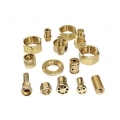
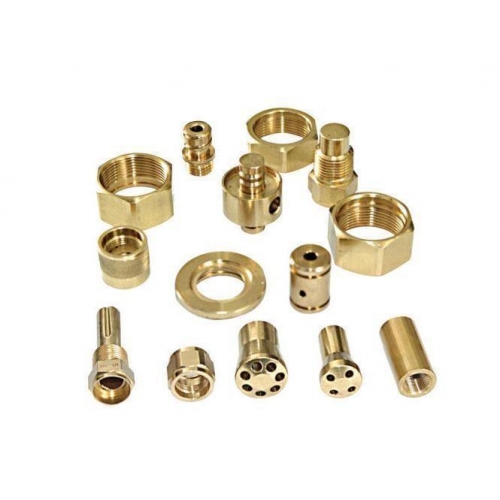
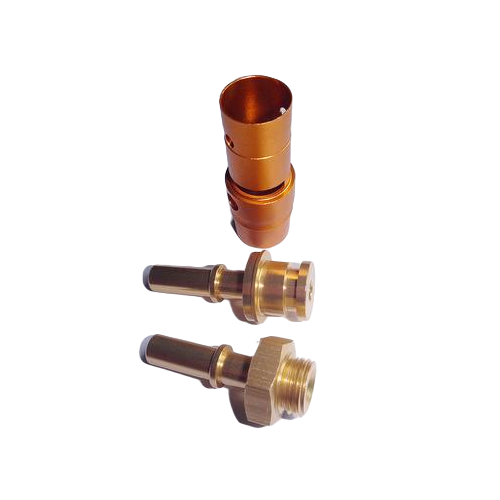
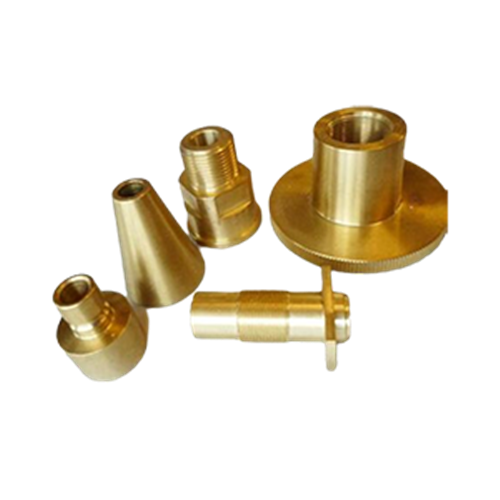
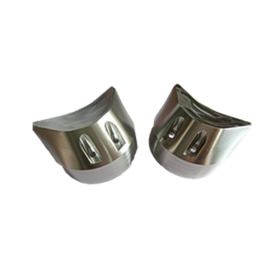
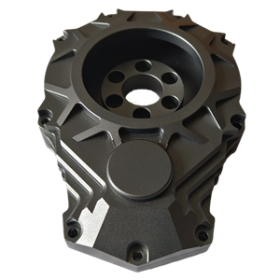
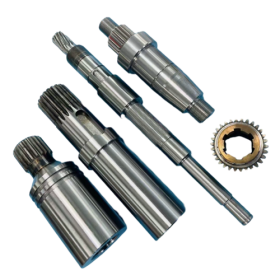
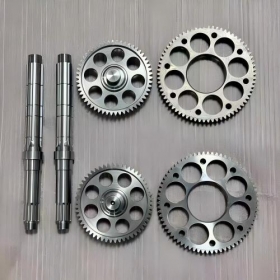
Brass is a special copper alloy, an alloy composed of copper and zinc, named because of its yellow color.
Brass has outstanding mechanical properties for cutting and processing and strong wear resistance, and is often used in the manufacture of valves, water pipes, connecting pipes for air conditioning internal and external units and radiators.
Essential Brass Fitting Parts for Industrial Use
To build an efficient system, you need to understand the function of each specific fitting. Here is a breakdown of the core brass components we specialize in at Gajanan Brass Global:
1. Adapters and Connectors
Adapters are used to connect two pipes or tubes of different sizes or thread types.
Male Adapters: Feature external threads.
Female Adapters: Feature internal threads.
Hex Nipples: Used to connect two female-threaded pipes or fittings.
2. Elbows (45° and 90°)
Industrial layouts are rarely straight lines. Elbows allow for changes in direction without causing significant pressure drops or turbulence within the flow.
3. Tees and Crosses
These are “multi-port” fittings. A Tee allows for a 90-degree branch off a main line, while a Cross provides four-way connectivity. These are essential in complex distribution manifolds.
4. Couplings and Unions
While both join two pipes, they serve different purposes:
Couplings: Designed for permanent or semi-permanent connections.
Unions: Feature a three-piece design that allows the pipes to be disconnected easily for maintenance or repairs without having to rotate the pipes themselves.
5. Compression Fittings
Commonly used in gas and liquid systems where soldering is not an option. These consist of a body, a nut, and a ferrule (sleeve). As the nut is tightened, the ferrule is compressed against the tube, creating a watertight seal.

Dongguan Bomei Precision Machining Co., Ltd
Address: 101, No68, Ditangshan Road 2,Dalingshan Town, Dongguan, Guangdong, China
Contact person: Evan Xiao Evan Xiao